Table of contents
Clearing land can be a challenging task, especially when deciding on the right equipment for the job. Understanding the differences between mulchers and chippers is essential for maximizing efficiency and achieving the desired results. Discover which machine best suits your land clearing needs as you explore the following expert insights.
Understanding land clearing needs
Land clearing projects vary widely in their scale and complexity, making careful equipment selection vital for efficient land management. Whether preparing a new lot for construction, maintaining trails through woodland, or tackling unexpected storm debris removal, each scenario presents unique challenges that affect which tools deliver the best results. For example, lot preparation often involves removing dense undergrowth and small trees, requiring machines capable of handling significant vegetation density, while trail maintenance focuses on clearing pathways without disturbing surrounding ecosystems. In storm debris removal cases, rapid response and adaptability are needed to manage mixed materials, from branches to larger fallen timber. The most knowledgeable land management specialist will always recommend matching the equipment's power and specific features to the project's vegetation density and debris type. This tailored approach ensures not only effective debris removal but also promotes long-term site health and efficient land management practices.
How mulchers work
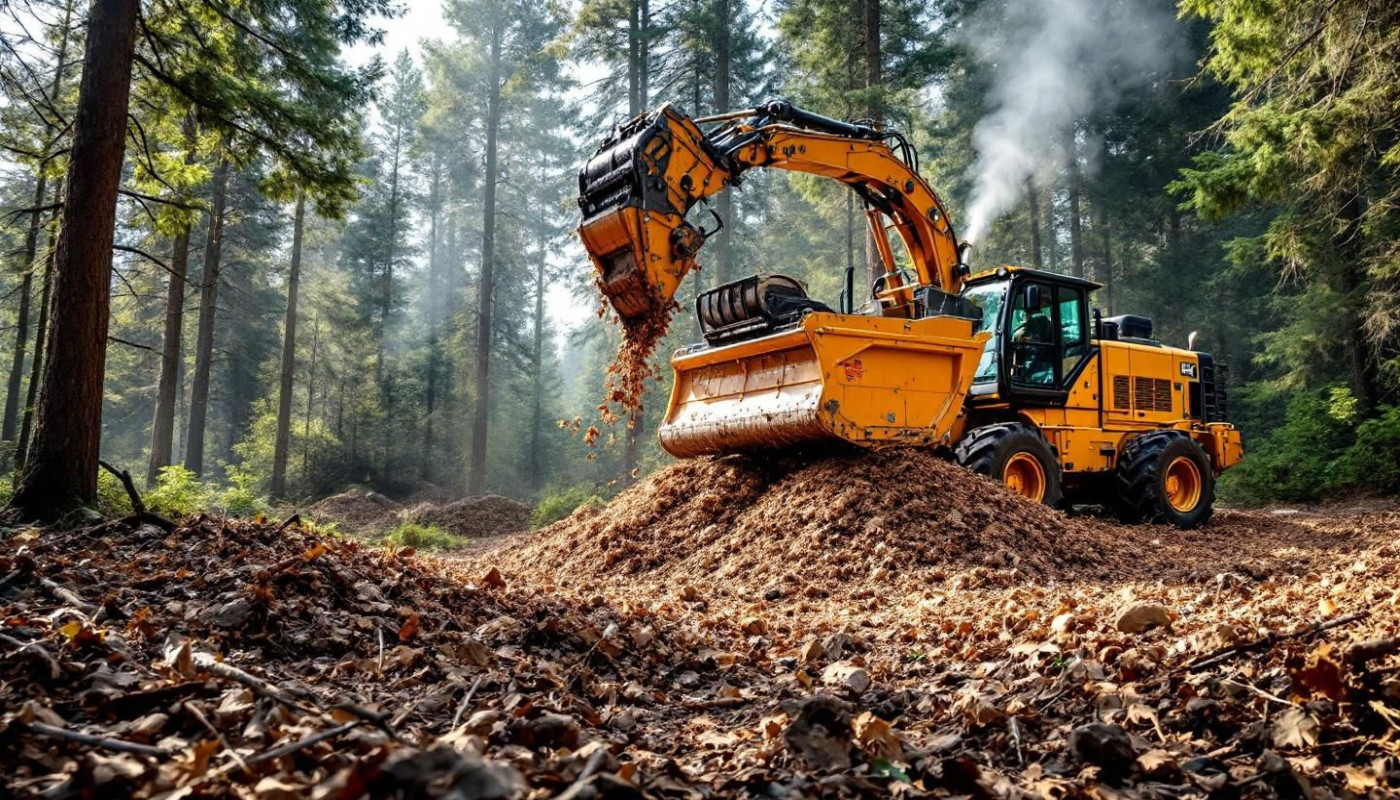
Mulchers operate using a rotary drum fitted with sharp teeth or blades, which spins at high speeds to shred vegetation, branches, and smaller trees directly on-site. This process efficiently handles brush management by breaking down dense undergrowth, shrubs, and woody debris into fine organic matter that is evenly distributed over the ground. The resulting mulch layer acts as a natural barrier, reducing erosion, retaining soil moisture, and providing insulation for plant roots. A senior forestry engineer would explain that mulchers not only clear land rapidly but also promote soil enrichment by accelerating the decomposition of plant material, leading to improved ground health and a richer, more fertile substrate for future growth. This method is favored in sustainable land clearing projects since it minimizes the need for burning or hauling debris, conserves nutrients, and supports ongoing ecosystem balance.
How chippers operate
Chippers are specialized machines designed for wood reduction and debris processing, making them highly effective for breaking down large branches and logs. The operational principle of chippers centers around a robust feed mechanism that directs woody material into a system of sharp, rotating blades. This mechanism ensures that branches of varying sizes are consistently and safely processed, transforming them into uniform wood chips. These chips are significantly easier to handle, transport, or dispose of compared to whole branches, which is a key advantage for efficient branch disposal during land clearing or site clean-up projects.
Chippers are particularly suitable for handling tough, fibrous wood and dense debris, making them indispensable in environments where fallen trees or thick brush need rapid removal. The process begins when the feed mechanism pulls material into the chipper, where high-speed blades or drums slice and shred the branches and logs into small chips. This results in a substantial reduction in the volume of waste, streamlining the workflow for property owners, landscapers, and forestry professionals seeking to manage wood chips for mulching, composting, or disposal. In addition, chippers can handle various wood types, from hardwood to softwood, further enhancing their versatility.
For those considering chippers for their projects, consulting an expert in arboricultural machinery is highly recommended to ensure proper machinery selection and safe operation. Detailed guidance on chipper capacity, safety features, and maintenance requirements helps potential users maximize efficiency and longevity. To learn more about the right chipper for your needs, visit the address for comprehensive information and expert advice tailored to land clearing and debris processing solutions.
Comparing efficiency and outcomes
For those evaluating land clearing tools, understanding efficiency comparison between mulchers and chippers is key. A chief operations analyst should assess how each option performs in various scenarios, focusing on material processing rate—measuring how much vegetation each machine can handle per hour. Mulchers generally offer faster throughput, rapidly shredding brush and small trees in-place, which translates to a higher material processing rate in densely vegetated or overgrown areas. The residue type produced by mulchers consists of fine, evenly distributed mulch that can enhance soil improvement by acting as a natural fertilizer and moisture retainer, directly contributing to waste reduction on-site.
Chippers, in contrast, tend to process material at a slower rate, as branches and trunks must be fed manually or with mechanical assistance. Their output is more uniform wood chips, which are often removed from the site or repurposed as landscaping material. While this can offer cleaner project sites, it may lead to higher waste generation if chips are not utilized locally, posing a challenge for those striving for optimal waste reduction. In areas where soil improvement is a priority, mulchers usually present a greater benefit, as their finely shredded output decomposes more quickly, returning nutrients to the land.
The choice between these land clearing tools also impacts operational logistics. Mulchers excel in open areas with extensive brush, delivering high efficiency comparison results due to minimal manual labor and continuous processing. Chippers, on the other hand, become advantageous when dealing with large, singular trees or where selective clearing is needed. Their ability to handle thicker trunks is unmatched, although the time investment and potential for leftover debris may affect overall efficiency.
An informed efficiency comparison, delivered by a chief operations analyst, should also consider site-specific goals such as residue type preference, desired soil improvement, and the importance of minimizing waste. Weighing these aspects ensures that the right tool aligns with both environmental and operational objectives, maximizing both productivity and land restoration outcomes.
Choosing the right machine
Selecting between a mulcher and a chipper for land clearing projects involves a careful evaluation of machine selection based on project requirements, terrain type, and anticipated environmental impact. Begin with a thorough site assessment to determine whether dense vegetation, large-diameter trees, or heavy brush dominates the area, as this will influence the suitability of each land clearing equipment option. Mulchers excel in tackling wide swaths of brush and smaller trees, quickly reducing biomass into fine mulch that can remain onsite, while chippers specialize in processing larger wood pieces into chips suitable for transport or other uses. The project's scale and access conditions—such as slopes, soil stability, and obstacles—also play a significant role in machine selection, since certain machines navigate rugged or uneven ground more effectively.
Environmental impact is another deciding factor, as mulchers often minimize soil disturbance and promote nutrient recycling, while chippers may require debris removal, affecting site recovery. Consulting an experienced land clearing consultant is highly recommended; such a professional can account for all variables, including ecological considerations and long-term land use plans, ensuring the equipment chosen aligns perfectly with both immediate and future project requirements. This strategic approach not only maximizes efficiency but also supports responsible, sustainable land management practices.
Similar articles

Discovering Wynwood Horizon: A Luxurious Oasis in Meydan

Reviving the Past: The Art of Renovating Historic Homes
